
M1 – Livestock Management with AI
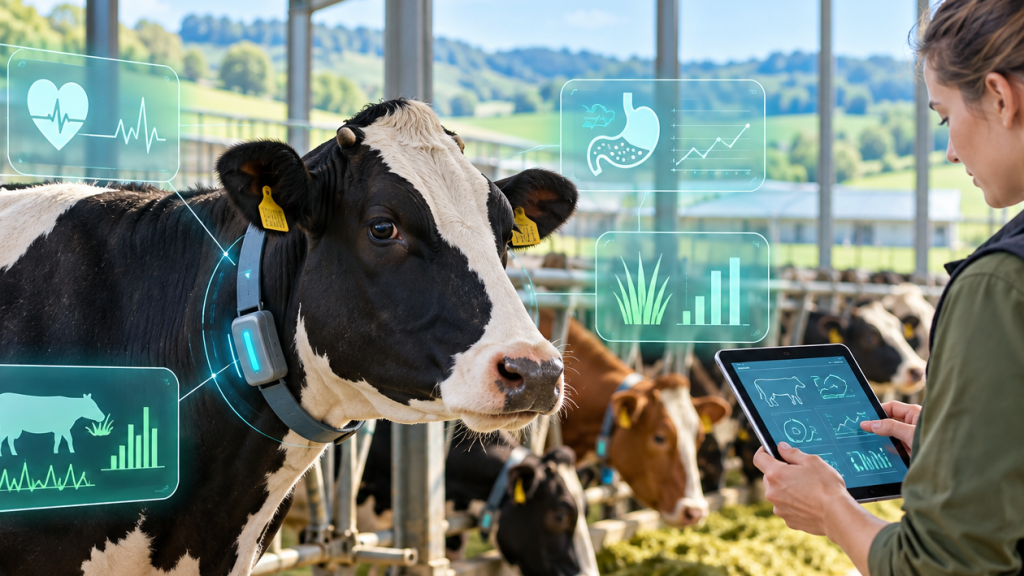
This module explores how Artificial Intelligence supports modern livestock farming through smart sensors, cameras and automated systems. It introduces practical applications in animal health and welfare monitoring, precision feeding, reproduction and production management. Learners discover how data can support early detection of problems, reduce waste and improve farm sustainability, while considering the limitations of technology and the essential role of human expertise.
M2 – Food Production & Processing Using AI
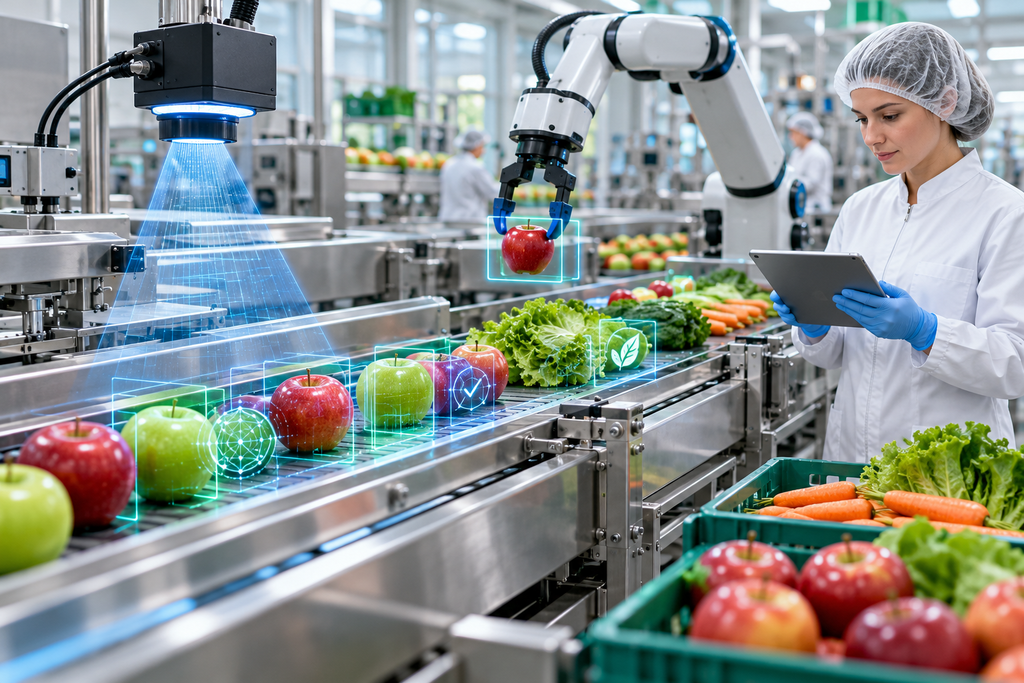
This module explores how Artificial Intelligence supports the food chain, from farm to consumer. Learners discover practical applications in food processing, quality control, safety, storage and logistics. It highlights how smart sensors, computer vision and automated systems can improve efficiency, support traceability and reduce food waste, while emphasising responsible data use and the essential role of human expertise.
M3 – Plant Production & Crop Management
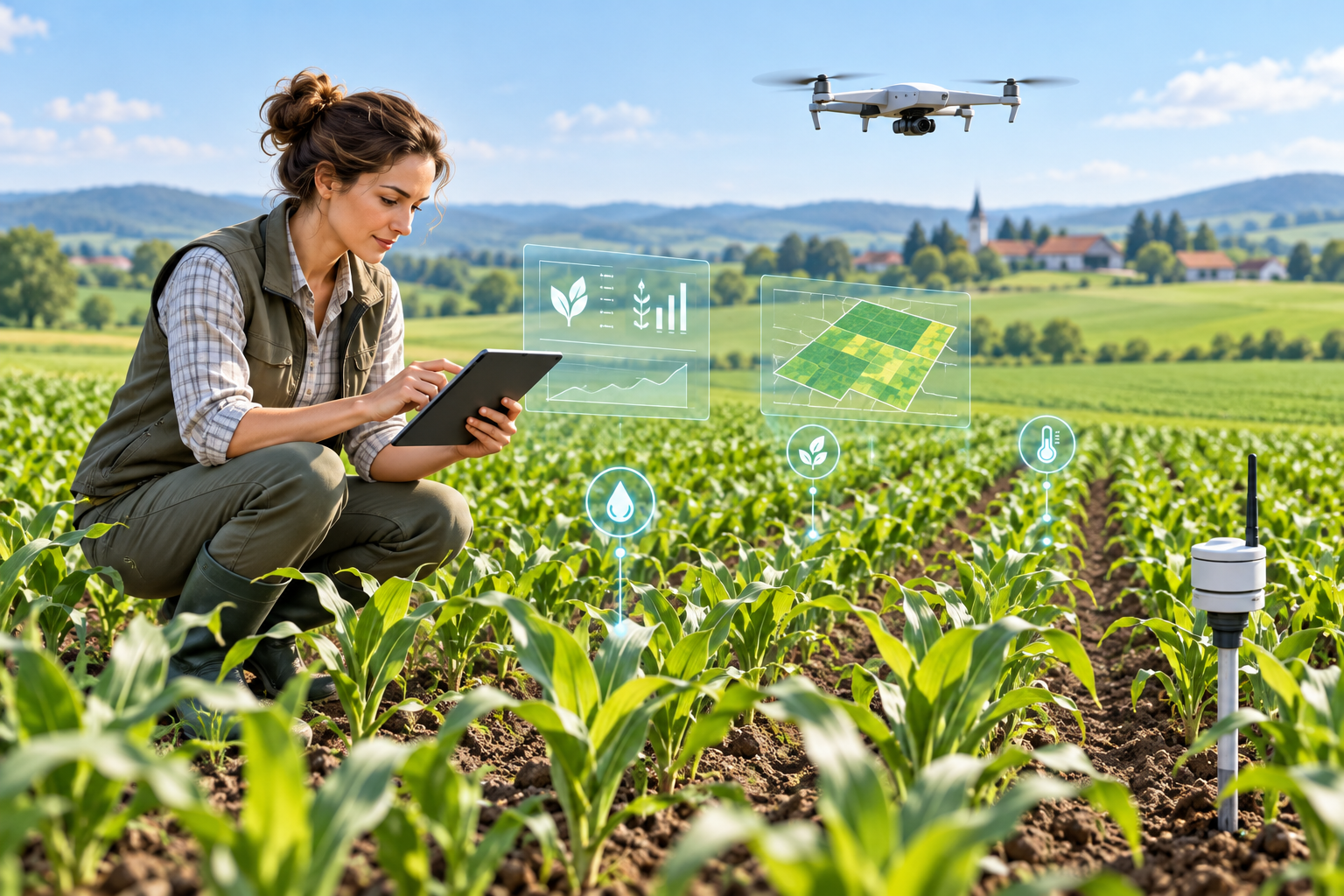
This module introduces the foundations of crop production, including soil management, seed selection, fertilisation, irrigation and crop protection. Learners explore how Artificial Intelligence, sensors and drones can support crop monitoring, disease detection, yield prediction and harvesting decisions. It highlights how combining agronomic knowledge with digital technologies can improve productivity, reduce waste and promote the responsible use of natural resources.
M4 – AI for Environmental Sustainability in Agriculture
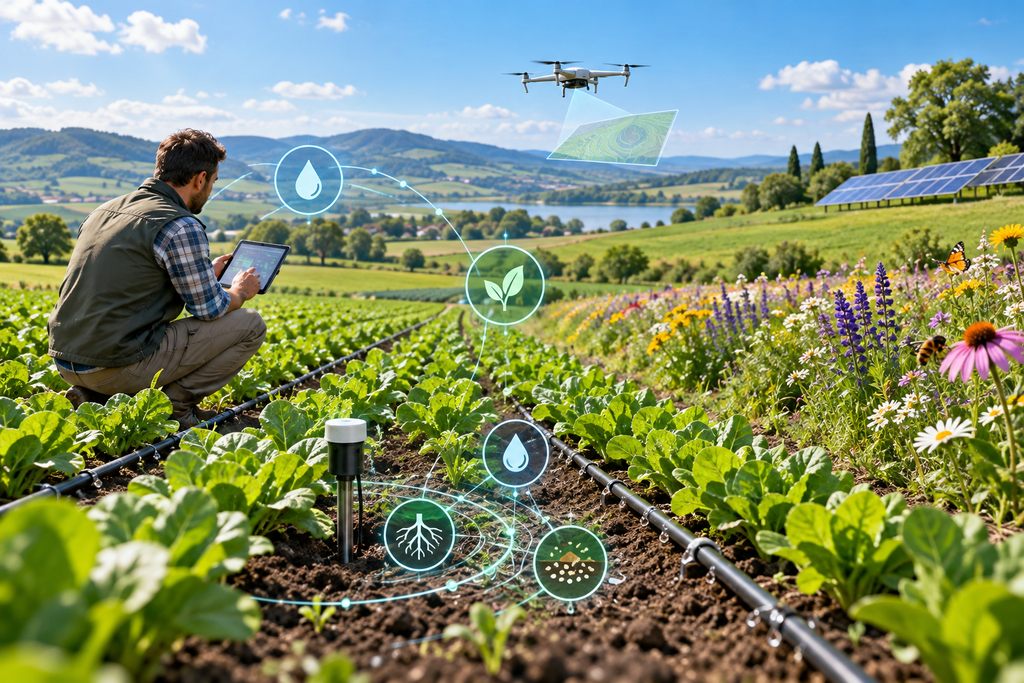
This module explores how Artificial Intelligence can support more sustainable farming through soil health monitoring, smart irrigation, crop monitoring and targeted pest control. Learners discover how sensors, drones and satellite data help optimise resource use and reduce environmental impact. It highlights the role of precision agriculture in protecting ecosystems, responding to climate change and building resilient farming systems.
M5 – Artificial Intelligence for Educators

This module introduces educators to the fundamentals of Artificial Intelligence and its practical applications in teaching and learning. Participants explore how generative AI can support lesson planning, content creation, personalised learning and assessment. It highlights the opportunities and risks of AI in education, helping teachers design AI-supported learning activities while maintaining critical thinking, responsible use and professional judgement.
M6 – Data Science and Data Literacy for Educators

This module helps educators understand, analyse and use data to support educational and professional decisions. Participants explore the data lifecycle, from collecting and organising datasets to basic analysis and meaningful visualisation. It highlights how reliable data and critical interpretation can reveal patterns, answer practical questions and guide informed decisions in education and agriculture.
M7 – Information and Communication Technologies (ICT) for Smart Education

This module develops educators’ digital competencies for modern teaching and learning. Participants explore digital learning environments, educational content creation and online collaboration tools. It highlights how ICT can support flexible, learner-centred education and help teachers design engaging activities that encourage collaboration, creativity and practical problem-solving.